GenAI Zürich 2026

Conference Schedule

Experience over 120 sessions across multiple stages at GenAI
Zürich 2026, the European Summit on Applied Generative AI

Buy tickets
Day 1
1 April 2026
Day 2
2 April 2026
Tech & Startup Stage
1st floor – Gelber Saal
9:30-10:30
GenAI in Action
Document Intelligence Without the Black Box: How Thesify Makes AI-Assisted Writing Traceable, Auditable, and Trustworthy
Co-Founder & CEO
@thesify.ai
Every organisation produces documents it cannot afford to get wrong: technical reports, regulatory filings, compliance documentation, proposals. Generative AI can accelerate this work, but it introduces a problem most tools ignore — when AI contributes to a document, who is responsible for what? Thesify is a Swiss-made document intelligence platform that solves this with two products: AI agents for collaborative writing and a structured, criteria-based review engine. Unlike conventional AI writing tools, every AI contribution in Thesify is visible, attributed, and reversible. The result is a system where authors stay in control, organisations can audit every edit, and AI becomes a transparent collaborator rather than an opaque shortcut. In this pitch, we show how Thesify brings the traceability standards of scientific peer review into enterprise document workflows, and why trust — not speed — is the real bottleneck for GenAI adoption in high-stakes writing.
From Pilots to Production: How Enterprises Build, Orchestrate and Secure AI Agents
Enterprises are piloting AI chatbots, but most projects stall at FAQ and RAG. The assistants answer questions, yet cannot reliably execute work across real services. They often lack memory, proactivity, and are stuck in silos. In this talk, I present an agentic execution layer for production AI agents. We show how to orchestrate a multi-agent system that turns your APIs and workflows into domain agents, adds a persistent memory layer, and provides observability, replay, and regression testing so teams can ship changes with control. Key takeaways: A reference architecture blueprint for enterprises. A platform for observability, tracing and versioning.
From SaaS Sprawl to Savings: How GenAI Cuts Software Waste at Scale
Software spend is large, but the data behind it is fragmented across contracts, finance, IT, and usage systems. That fragmentation creates SaaS sprawl: overlapping tools, underused licenses, weak governance, and hidden shadow IT. Scaleups feel it as wasted budget and unclear ownership; enterprises feel it as renewal risk, compliance exposure, and slow decision-making. This talk explores how GenAI helps when it is grounded in real operational data and domain playbooks. Instead of acting as a generic chatbot, AI becomes a decision layer on top of existing tools—turning contract, usage, and portfolio data into savings opportunities, renewal briefings, and governance actions. We will cover practical use cases such as duplicate SaaS detection, license right-sizing, shadow IT triage, and procurement-ready negotiation support. The key takeaway is simple: GenAI creates value not by replacing systems, but by helping teams move faster from fragmented software data to confident decisions.
From PDF Chaos to ERP Gold: Document Extraction in Manufacturing with GenAI
Every manufacturing company has that one person who spends their week copying data from PDFs into the ERP. At one Swiss CNC shop, that person was the CEO. Twenty hours a week, every week. We built inbox.factoriq to fix this: an AI-powered extraction engine that ingests messy manufacturing PDFs, classifies document types, extracts structured data with confidence scoring, and prepares it for ERP import. A human-in-the-loop review catches what the AI misses. User corrections feed back as few-shot examples, so the system learns per customer over time. This talk is an honest field report. We'll share what works: 90% automation rates, payback within months, and iterative learning that genuinely compounds. But we'll also cover what's still hard: scanned documents from the '90s that degrade accuracy, vendor layouts that seem designed to confuse parsers, delivery schedules that collapse into nonsense, and edge cases that will keep humans employed for a while yet. Key takeaways: how to scope a document extraction project realistically, where LLMs excel and where they quietly hallucinate in manufacturing contexts, and why "90% automated with human review" beats "100% automated with silent errors" every time.
The Agentic Future of Customer Engagement in Pharma
Customer engagement in pharma is moving toward an agentic future, where systems don’t just support decisions, but actively guide what to do next. In this session, we show how a Customer 360 copilot changes how commercial teams engage healthcare professionals and ultimately help improve patients’ lives. Instead of relying on static segmentation and manual planning, the system continuously analyzes behavior, preferences, and interactions to identify who to engage, why it matters now, and what action to take. The copilot brings together a full view of each customer, including engagement history, channel preferences, and network context. This enables more dynamic segmentation and more relevant, timely interactions, moving away from one-size-fits-all outreach and toward engagement that better supports patient care. Rather than starting with chat, users see clear priorities and recommended actions upfront. GenAI is then used to explain, refine, and adapt those recommendations. The result is a new engagement model: more proactive, more personalized, and more connected to real-world outcomes. Helping healthcare professionals improve the outcomes for patients over time.
Risk-Free GenAI Agents for SMEs and Mid-Sized Businesses – Pay-Per-Use Transformation
Generative AI promises enormous productivity gains – yet for SMEs and mid-sized companies in particular, barriers to entry such as cost risk, integration, and operations often remain obstacles. In this presentation, we show how companies can achieve tangible value with GenAI agents without requiring large upfront investments or complex infrastructure. The focus is on a pay-per-use approach that makes innovation predictable, scalable, and above all risk-free. Using three real-world examples, we demonstrate how this new form of digital intelligence is applied in everyday business: In a manufacturing context, we show how GenAI agents support processes, make knowledge accessible, and relieve operational teams. In the financial sector, the second use case illustrates how intelligent agents can improve consulting, analysis, and internal workflows. In addition, we present a Voice AI use case in the form of an AI receptionist agent, demonstrating how AI can already handle and scale customer communication today. Furthermore, the talk highlights why the key success factor is not just the technology itself, but the operating model behind it. Managed services play a central role in ensuring that GenAI agents are reliable, secure, and continuously improved. Companies therefore receive not just a tool, but an ongoing, optimized service. We take care of the implementation free of charge free of risk. The presentation is aimed at decision-makers, innovation leaders, and practitioners who want to understand how GenAI can be introduced pragmatically with clear business cases, minimal risk, and measurable benefits. The goal is to provide concrete impulses on how mid-sized companies can take the next step toward AI-driven value creation.
11:00-12:05
Building Reliable (Gen)AI Systems
Testing LLM Outputs: Caging the Wind or Just Another Day in the Office?
Software Development Engineer
@Adobe
Building LLM-based apps is all fun and games until they start growing. At that point, and particularly as your team starts getting bigger you can no longer rely on your "dev intuition" and every little change can cause a "butterfly effect" with unexpected consequences. In this talk, I’ll share our journey from a small, easy-to-test LLM app to a complex, skills-based system where one change could ripple across the whole codebase. You’ll hear how we struggled with custom testing solutions, why we eventually turned to Promptfoo, and how we built a system that not only catches regressions but also evaluates solution quality and maintainability. Along the way, I’ll show what worked, what didn’t, and the lessons we learned while trying to tame a system that sometimes felt more like caging the wind than writing tests.
AI at the Edge: Enabling Semantic Search and Device Memory with Qdrant
Recent advances in AI and generative models are enabling a growing number of applications that run directly on devices such as robots, cameras, industrial systems, and mobile devices. In many of these environments, relying entirely on cloud infrastructure is not always possible due to latency constraints, limited connectivity, or data privacy requirements. As a result, more AI systems are moving toward edge architectures, where part of the intelligence runs locally. The talk explores when and why edge AI becomes necessary and looks at the technologies enabling this shift, including lightweight language models and specialized edge hardware. We then focus on a critical component of modern AI pipelines: vector search. Many AI systems rely on embeddings for semantic retrieval, which raises the challenge of performing similarity search directly on edge devices. Join us to learn how to enable efficient vector search and semantic memory locally, illustrated through a practical edge-AI architecture.
Full-Stack Sovereignty: What It Really Takes to Own Your AI
Senior Solutions Architect
@Cohere

Europe is making unprecedented investments in AI sovereignty – but most strategies stop at infrastructure. True sovereignty is a stack: from the data center and cloud environment, through model training and provenance, to fine-tuning, application orchestration, and day-to-day operational control. A gap at any layer means someone else holds the keys. This session unpacks the full sovereign AI stack, layer by layer, and shows what deliberate choices at each level look like in practice. We'll share real-world architecture patterns and outline what a mature, full-stack sovereign AI deployment looks like for regulated enterprises.

Why Specialized Models Will Always Matter
Every frontier model follows the same lifecycle: dazzle in demos, get adopted for PoCs, then teams realize they need something smaller, faster, and purpose-built. This talk walks through the economics of the frontier-to-specialist pipeline, when to fine-tune, when distillation works, and why production AI is heading toward diverse model ecosystems, not monoculture.
Edge AI Revolution: Smarter, Faster Decisions at the Source

As AI adoption accelerates, many solutions still depend on cloud-based processing - introducing latency, bandwidth constraints, and data privacy challenges. These limitations become critical in environments that require immediate, reliable decisions, such as industrial automation, healthcare, and autonomous systems.

This innovation pitch highlights Edge AI as a strategic shift: bringing intelligence directly to embedded systems where data is generated. By enabling real-time processing without reliance on constant connectivity, Edge AI unlocks new possibilities - from instant quality control on production lines to autonomous operation in remote or constrained environments.

The session will showcase concrete examples to illustrate the impact of this paradigm and why it is gaining traction across industries. Key takeaways include understanding the value proposition of Edge AI, recognizing where it delivers the most impact, and identifying opportunities to apply this approach to create faster, more secure, and more resilient intelligent systems.

12:10-12:40
Rethinking Control: From Data Sovereignty to Decentralized AI
Data Sovereignty as the Foundation for Enterprise GenAI
Country Manager Alps, Cohesity
@Cohesity
Enterprise GenAI can only deliver sustainable value when it is built on a solid foundation of data sovereignty, security, and control. In many organizations, the adoption of GenAI does not fail because of missing technology, but due to fragmented data landscapes, regulatory constraints, and a lack of trust in how sensitive information is used. Data sovereignty ensures that enterprise data remains where it belongs—under full organizational control, transparent, auditable, and protected. It enables companies to apply GenAI to existing, often unstructured data without exposing themselves to compliance, privacy, or intellectual property risks. When data is properly protected, governed, and trusted, GenAI can be used with confidence to accelerate decision-making, uncover insights, and create measurable business value. Data sovereignty is therefore not a limitation—it is the essential enabler for scalable, responsible, and enterprise-ready GenAI.
Decentralized AI
AI agents are rapidly becoming integral to enterprise workflows, but today's agentic systems operate in silos. They can't verify each other's identity, negotiate payments, or coordinate tasks across organizational boundaries. This creates a bottleneck: as agents become more capable, the lack of interoperability and accountability limits their real-world adoption. Masumi Network addresses this by providing decentralized infrastructure for the AI agent economy, built on Cardano. The protocol gives every agent an on-chain identity, enables trustless agent-to-agent payments via escrow smart contracts, and offers a public registry for discovery and reputation scoring. Combined with multi-agent orchestration, this allows autonomous agents to discover, delegate, and collaborate on complex tasks without centralized control. Enterprises are already using this infrastructure through Sokosumi, our open marketplace for AI agents, to deploy and transact with agents in production. In this talk, Patrick Tobler, Founder of utxo AG and co-creator of Masumi, will share the architecture behind the protocol, real-world enterprise adoption, and why blockchain-based trust layers are essential for scaling agentic AI beyond single-vendor ecosystems. Key takeaways: Why AI agents need decentralized infrastructure, how multi-agent orchestration works in practice, and how enterprises are already building on it today.
14:00-14:30
(Gen)AI-Augmented Decision Making
From Data to Wisdom: Designing Robust Human – AI Decision Systems
Advisor, Digital Natives & Scale-Ups
@Databricks

The future of decision-making will be won by organizations that deliberately pair human judgment with AI at scale: decision flows where machines grind through the data and people bring expertise, nuance, and accountability.

This session is for executives and senior leaders who don’t need to code models but do need to own the impact of AI‑infused decisions. We will unpack how data becomes wisdom through four layers, giving participants a clear, practical mental model for designing robust Human‑AI decision systems that are reliable, auditable, and safe to use in the boardroom.

How AI Agents Negotiate: Why Governance Matters to Scale Good Intentions
Researcher in AI and Decision Making
As organizations increasingly rely on AI systems to support collective decisions, a key question emerges: how do AI agents resolve conflicts when there is no “right” answer? In this talk, I share insights from nearly 500 automated negotiation experiments involving leading AI models (Claude, GPT, and Gemini). The agents faced real game-theoretic dilemmas with conflicting preferences, voting paradoxes, time pressure, and institutional consequences for failure. Rather than focusing on who “wins,” the experiments reveal something more important: most successful negotiations were driven by agreement on process, not on outcomes. Over 85% of simulations reached agreement - and in virtually all successful cases, agents did so by adopting structured governance mechanisms such as voting rules, delegation, and agenda-setting. When governance was weak, even advanced models frequently failed. The key takeaway is that governance design shapes behavior more than model intelligence alone. For organizations deploying AI in procurement, compliance, or decision support, provider choice and institutional rules are strategic decisions, not technical details.
14:30-15:00
GenAI Research, Innovation & Education
Service Offerings from CSCS for the Swiss R&D+Innovation Ecosystem
Innovative start-ups/spin-offs and SMEs use a lot of computing resources for their research & development work. Often this takes place in cloud computing services from corporations out of Switzerland at very high prices, especially when comparing with the magnitude of seed funding or staff budgets. This raises questions of dependency/sovereignty, among many others. The Swiss National Supercomputing Center offers compelling alternatives for this category of work. This way it serves not only the academic ecosystem but also serves its extended mandate of serving broader society.
Cognitive Debt and AI: Reality and Mitigation Strategy
Generative AI is already delivering measurable gains: in a peer-reviewed study of professionals, access to ChatGPT cut task time by about 40% while improving output quality by 18%. In my own research and practice, I found GenAI users could double their productivity. But not everyone. And speed is not the whole story. Recent studies suggest that, in some contexts, GenAI can also weaken quality control and oversight, creating new risks for organizations. Cognitive debt accumulates invisibly until a crisis exposes it. This session is for executives who want the signal beneath the hype. I will examine where AI creates real value, when it begins to accumulate cognitive debt, and why some organizations become truly AI-ready while others struggle. Without going into detail, I will offer a practical leadership lens for recognizing cognitive debt and strengthening human judgment as the AI race continues evolving in cost, speed, and capability.
Can You See the Algorithm?
Artificial intelligence increasingly shapes everyday life, yet its infrastructures often remain invisible to adults and to young users. Drawing on the exhibition Can You See Me Now? by WE ARE AIA developed educational formats such as Escape Room Hacked. This input explores how art contributes to the critical discourse on AI from an educational perspective. Artistic practices reveal systems of data tracking, algorithmic governance, and digital surveillance, making complex technologies tangible through experiential learning. Workshops and participatory formats invite students to question how data is produced and used in daily life. For educators, this highlights the importance of interdisciplinary, experience-based approaches that combine technological literacy with ethical reflection.
15:30-15:55
The VC Lens on GenAI
The Zero Partner Fund: Building an AI-Native VC
VCs evaluate AI startups. But what if the VC itself runs on AI? At Ellipsis Venture, we've built agentic systems for deal flow, diligence, and fund ops—turning a two-partner fund into something that operates like a much larger team. Moreover, if AI can help run a fund, can it also help founders build companies from ideation through validation to MVP? This talk is part demo, part manifesto. I'll show the tools we actually use, and present a framework for investors and founders building companies where AI isn't a feature but the foundation. If you're skeptical that agents can do real work, come and join the conversation.
Pre-Seed Investments in Switzerland
For founders and future founders, this lecture offers a concrete, honest picture of pre-seed fundraising in Switzerland, less about decks and metrics, more about people and perception. In a moment of broad capital availability across AI and beyond, understanding what investors are actually betting on at this stage is useful to have figured out before you start structuring your first financing round.
16:00-16:55
Art in the age of GenAI
Dancing Plague - Hackinig GTA to let the men dance
2girls1comp
Artist Duo
@2girls1comp
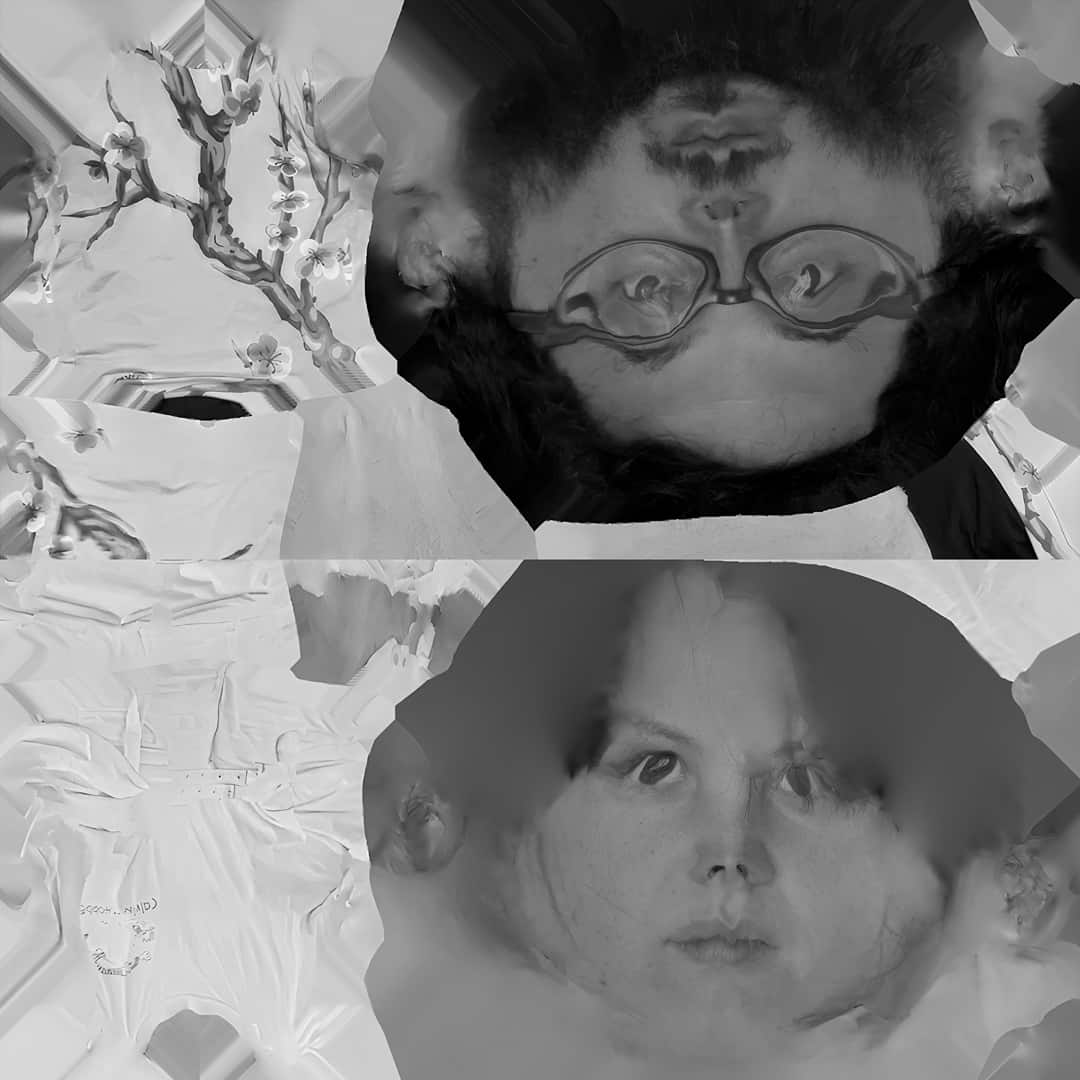
2girls1comp is a modding duo founded in 2023 by Marco De Mutiis (Italy, 1983) and Alexandra Pfammatter (Switzerland, 1993). Their work changes the logic of video games as an act of creative counter-play, revealing the social and economic fabric in which they are immersed: from reclaiming global digital infrastructures to commenting on free labor within the capitalist ideologies of the gaming industry, to showcasing the way play can influence its subjects through its mechanics. Their projects are distributed within the gaming and modding community, as well as cultural and artistic contexts.
Friendly Fire at the Shrink - An AI psychiatrist for (neuro) physiological impact research
Festival Founder, Filmmaker, Researcher
@'After the Algorithm' Festival
Manuel Flurin Hendry is an award-winning feature film director, screenwriter, lecturer and academic researcher born and based in Zurich, Switzerland. He teaches cinematic arts at the ZHdK Zurich University of the Arts and at the International Film School Cologne. At ETH Zurich, he lectures on AI, algorithmic literacy and the societal impact of Large Language Models. His research projects, investigate the pressures of digital systems on self-perception, visual education, labor relations and artistic practice. Manuel promotes computational literacy and critique through workshops, art interventions and the festival «After The Algorithm», which he founded. His book «The Feeling Machine» will be published by De Gruyter in 2026.
Panel Discussion
Tech
Tech
Tech
Tech
Why Technology Needs Art?
2girls1comp
Artist Duo
@2girls1comp
Festival Founder, Filmmaker, Researcher
@'After the Algorithm' Festival
Adrian Christopher Notz
Generative AI is transforming every sector. However, most public conversations about it occur in isolation, with experts talking to experts and critics talking to critics. The 'After the Algorithm' (ATA) festival breaks that pattern. By bringing over a hundred artists and scientists into direct contact with general audiences, students, and decision-makers, the festival made abstract AI concepts tangible — not through slides, but through experience. The ATA festival's key element was not only bringing artists and scientists together, but also using them and their work to mediate difficult, inaccessible AI topics. Alongside the artist duo 2girls1comp, who are exhibiting their piece Dancing Plague at GenAI Zurich; the artist and software developer Julia Schicker; the film director, researcher and ATA festival director Manuel Flurin Hendry; and the curator of the ATA exhibition, Adrian Notz, we will discuss the importance of art and its role in the current AI hype. When technology moves this fast, we need more critical and creative thinking, as well as more ethical questioning, all of which should be playful, experiential and speculative. The festival is supported by Pro Helvetia, the Mercator Foundation, Innovation Zurich, the ETH AI Center and the UZH AI Hub. GenAI Zurich is our lead community partner. Panel discussion with 2girls1comp, Julia Schicker and Manuel Flurin Hendry. Moderated Adrian Notz.
2026 Sponsors and Partners

Supported by
industry leaders and innovative startups

We are building a community of forward-looking practitioners who are at the frontier of GenAI innovation. Interested to join?

Become a partner

The Turing Genius

Neural Masters

Generative Starters

Startup Allies

Hackathon Co-organizers

Hackathon Partners

Corporate Partners

Special Partner for Ethical AI, Cybersecurity Governance & Human Rights

Community Partners